
For many first-time travellers, one question often creates hesitation: “How will I communicate in Japan?” English, Arabic, Hindi, Malayalam, and other international languages are not commonly spoken everywhere in Japan, especially outside major tourist areas. This can make simple things like asking for directions, ordering food, finding a train platform, shopping, or explaining dietary preferences feel challenging.
Download the Japanese travel phrases PDF at the end of this article
That’s why learning a few basic Japanese phrases can make your trip much easier, smoother, and more enjoyable. So, if you are still trying to understand the difference between “Konnichiwa” and “Konbanwa,” this beginner-friendly guide will help you speak with more confidence during your Japan trip.
ALSO SEE – Trip to Japan from India-How to Plan?(Updated Guide with Costs and Tips)
Basic Japanese Phrases for Tourists to learn and remember
Let’s look at the usual Japanese words and sentences that will help you enjoy the tour:
Common Japanese Phrases for Tourists
Learn these common Japanese phrases for tourists to greet locals, ask directions, order food, shop confidently, and handle emergencies easily.
| English | Japanese | Pronunciation |
|---|---|---|
| Excuse me / Sorry | すみません | Sumimasen |
| I don’t understand Japanese | 日本語が分かりません | Nihongo ga wakarimasen |
| Do you speak English? | 英語を話せますか? | Eigo o hanasemasu ka? |
| Where is the toilet? | トイレはどこですか? | Toire wa doko desu ka? |
| How much is this? | これはいくらですか? | Kore wa ikura desu ka? |
| Can I pay by card? | カードで払えますか? | Kādo de haraemasu ka? |
| Please give me this | これをください | Kore o kudasai |
| I am vegetarian | ベジタリアンです | Bejitarian desu |
| Does this contain fish stock? | 魚のだしが入っていますか? | Sakana no dashi ga haitte imasu ka? |
| Please call the police | 警察を呼んでください | Keisatsu o yonde kudasai |
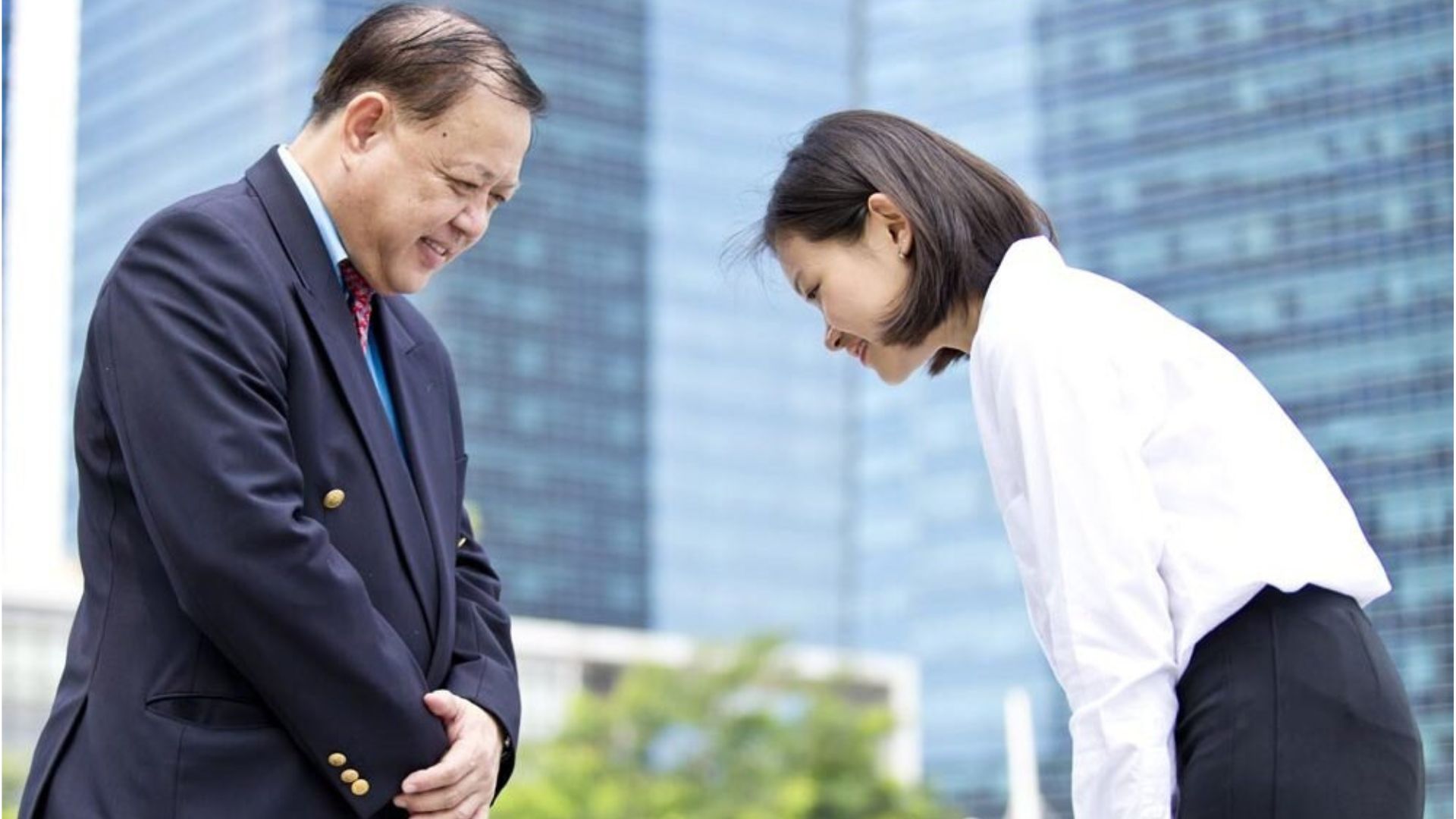
Japanese Phrases for Greetings
Use these Japanese phrases for greetings to politely start conversations, thank locals, say goodbye, and feel more confident while travelling in Japan.
ALSO SEE – Japan Tour Packages
| English | Japanese | Pronunciation |
|---|---|---|
| Hello | こんにちは | Konnichiwa |
| Good morning | おはようございます | Ohayō gozaimasu |
| Good evening | こんばんは | Konbanwa |
| Goodbye | さようなら | Sayonara |
| Thank you | ありがとうございます | Arigatou gozaimasu |
| Please go ahead / Here you go | どうぞ | Dōzo |
| Excuse me / Sorry | すみません | Sumimasen |
| Please | お願いします | Onegaishimasu |
| Nice to meet you | はじめまして | Hajimemashite |
| See you again | また会いましょう | Mata aimashou |
| Good night | おやすみなさい | Oyasuminasai |
Shopping Phrases in Japanese
Use these shopping phrases in Japanese to ask prices, request sizes or colours, check payment options, bargain politely, and shop confidently during your Japan trip.
| English | Japanese | Pronunciation |
|---|---|---|
| How much is this? | これはいくらですか? | Kore wa ikura desu ka? |
| Can I pay by card? | カードで払えますか? | Kādo de haraemasu ka? |
| Can I pay by cash? | 現金で払えますか? | Genkin de haraemasu ka? |
| Please give me this | これをください | Kore o kudasai |
| Do you have this? | これはありますか? | Kore wa arimasu ka? |
| Is there a discount? | 割引はありますか? | Waribiki wa arimasu ka? |
| I am just looking | 見ているだけです | Mite iru dake desu |
| Can I get a receipt? | レシートをください | Reshīto o kudasai |
| Do you have another size? | 他のサイズはありますか? | Hoka no saizu wa arimasu ka? |
| Do you have another colour? | 他の色はありますか? | Hoka no iro wa arimasu ka? |
Japanese Phrases to use in Hotels
Use these Japanese phrases to use in hotels to confirm your booking, check in easily, ask for Wi-Fi details, store luggage, and communicate basic requests with hotel staff during your stay in Japan.
| English | Japanese | Pronunciation |
|---|---|---|
| I have a reservation | 予約しています | Yoyaku shite imasu |
| I want to check in | チェックインしたいです | Chekku-in shitai desu |
| What is the Wi-Fi password? | Wi-Fiのパスワードは何ですか? | Wai-fai no pasuwādo wa nan desu ka? |
| Can I leave my luggage here? | 荷物を預けてもいいですか? | Nimotsu o azukete mo ii desu ka? |
| What time is check-out? | チェックアウトは何時ですか? | Chekku-auto wa nanji desu ka? |
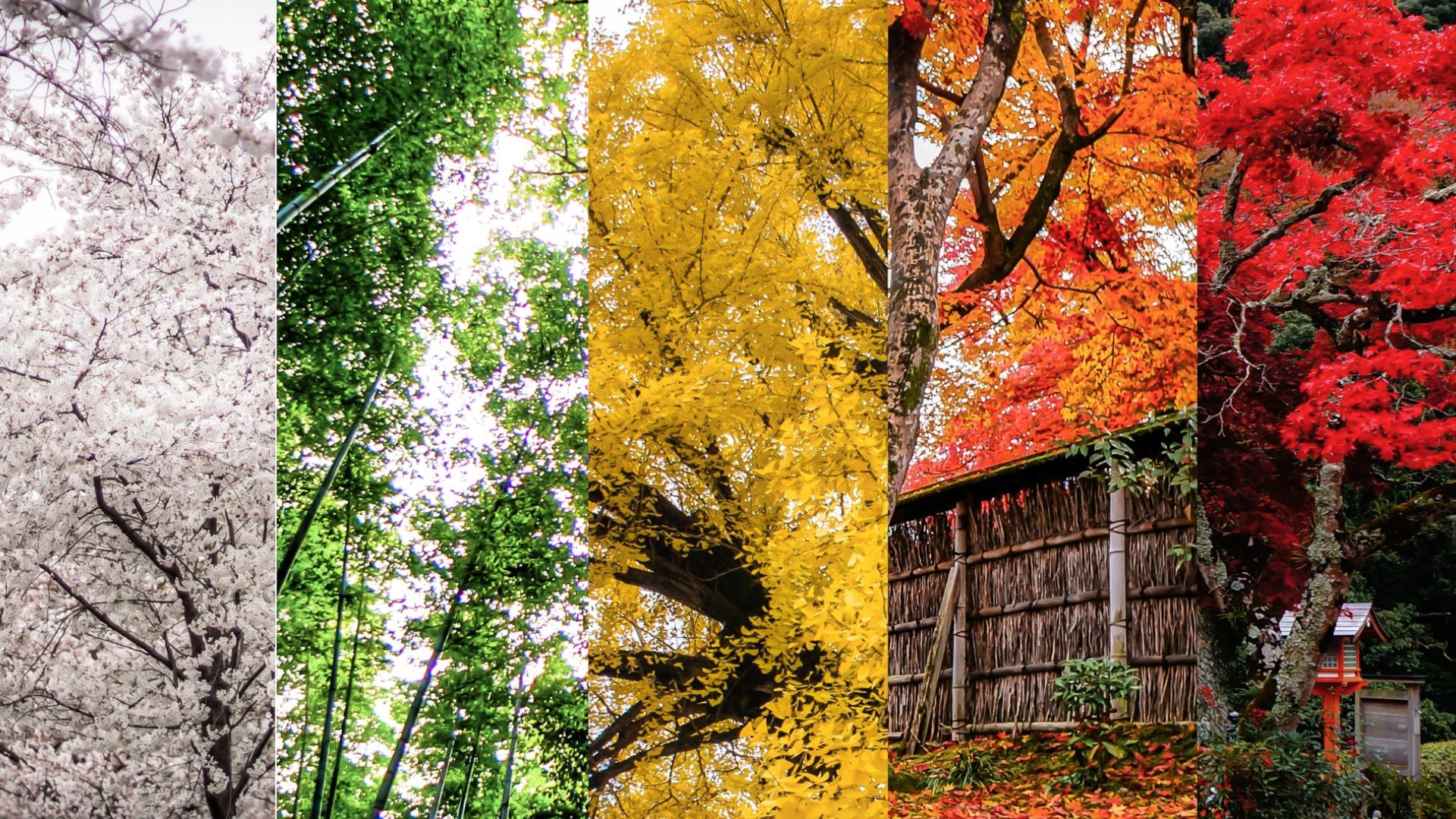
Season names in Japanese
Learn the season names in Japanese to talk about weather, travel plans, festivals, and the best time to visit Japan. These simple words help tourists understand local conversations, seasonal menus, cherry blossom updates, autumn foliage guides, and travel recommendations while exploring Japan during spring, summer, fall, or winter.
ALSO SEE – What is Cherry Blossom Festival in Japan?-When and where to celebrate
| English | Japanese | Pronunciation |
|---|---|---|
| Spring | 春 | Haru |
| Summer | 夏 | Natsu |
| Fall / Autumn | 秋 | Aki |
| Winter | 冬 | Fuyu |
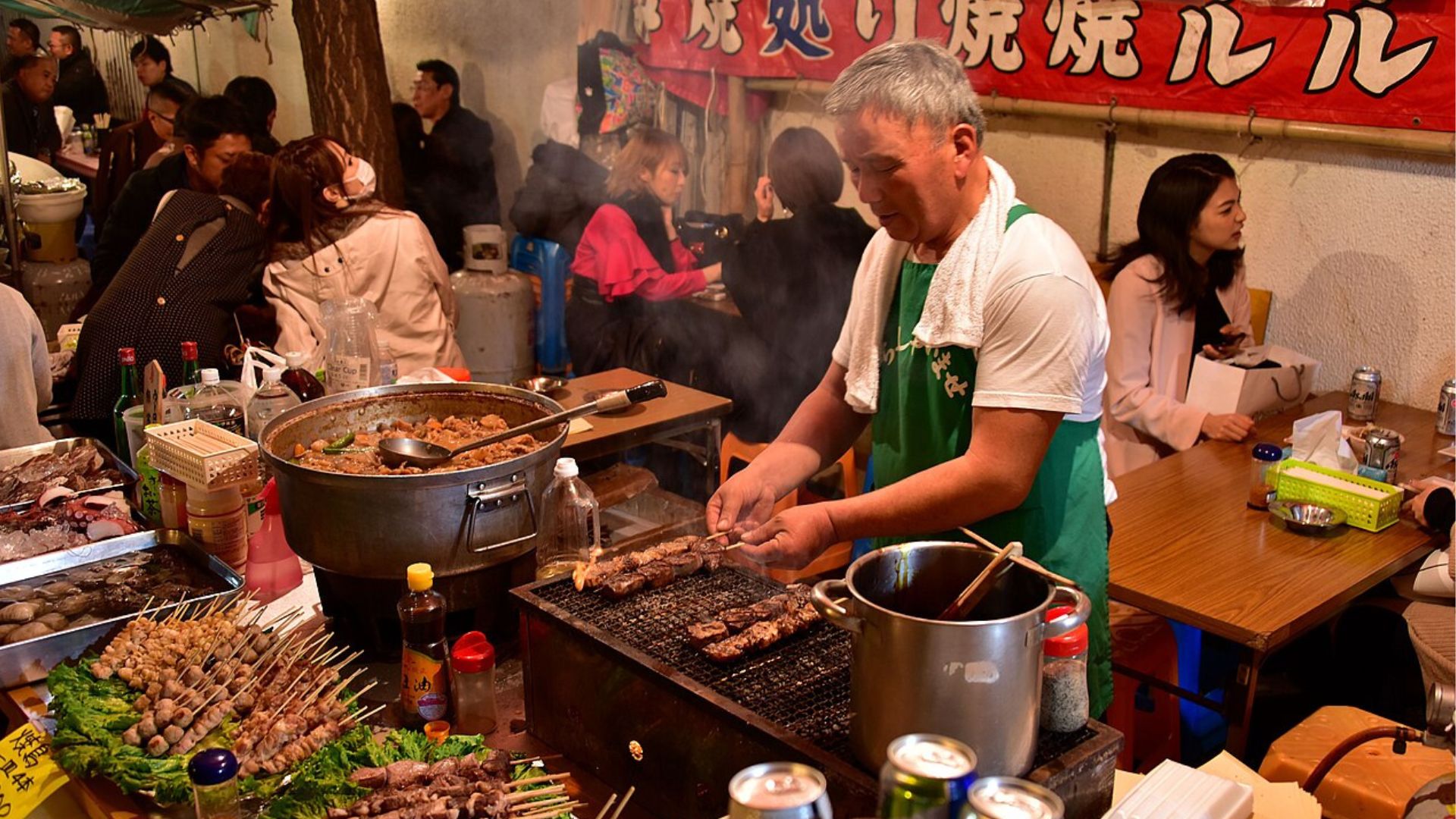
Japanese Phrases for Food
Use these Japanese phrases for food to order meals, ask for water, understand basic menu items, describe taste, and enjoy dining in Japan with more confidence.
| English | Japanese | Pronunciation |
|---|---|---|
| Rice / Meal | ご飯 | Gohan |
| Bread | パン | Pan |
| Water | 水 | Mizu |
| Tea | お茶 | Ocha |
| Coffee | コーヒー | Kōhī |
| Fish | 魚 | Sakana |
| Meat | 肉 | Niku |
| Vegetables | 野菜 | Yasai |
| Delicious | おいしい | Oishii |
Dietary Conversations useful for Strict Vegetarians from India
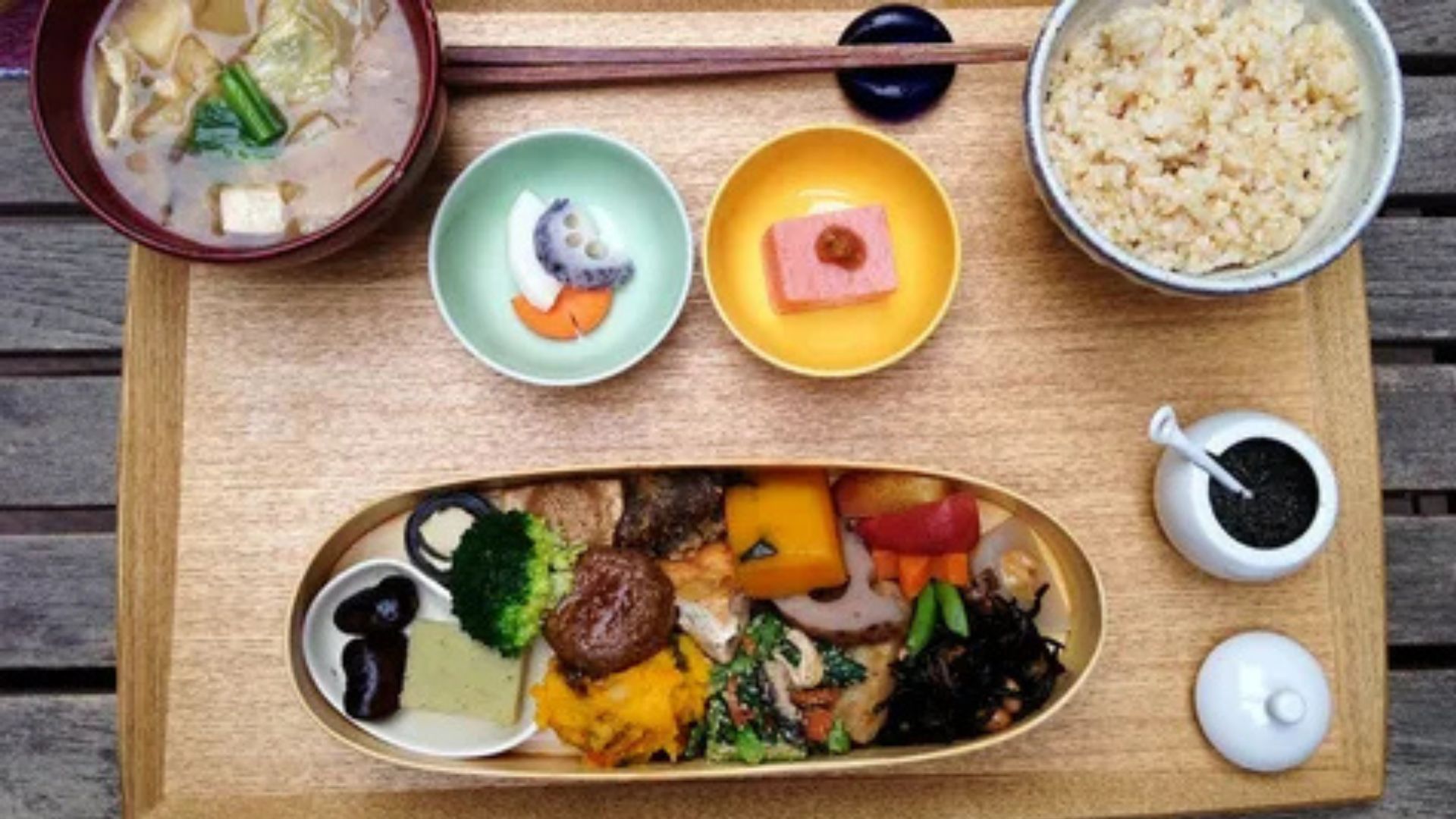
For strict vegetarians from India, learning a few dietary Japanese phrases can make dining in Japan much easier and safer. Many Japanese dishes may look vegetarian but can contain fish stock, meat broth, bonito flakes, or seafood-based seasoning. So, it is important to clearly explain what you can and cannot eat before ordering.
These phrases help you ask restaurant staff whether a dish contains meat, fish, beef, pork, dashi, or other non-vegetarian ingredients. They also help you confidently request simple vegetarian options like rice, vegetables, cheese, or eggs, depending on your food preferences.
| English | Japanese | Pronunciation |
|---|---|---|
| I am a strict vegetarian. Therefore, I do not eat any meat, fish or fish products. Please make sure that my food does not include any of these items. | 私は厳格なベジタリアンです。肉、魚、魚製品は一切食べません。これらが料理に含まれていないことを確認してください。 | Watashi wa genkaku na bejitarian desu. Niku, sakana, sakana seihin wa issai tabemasen. Korera ga ryōri ni fukumarete inai koto o kakunin shite kudasai. |
| I cannot eat meat, fish, beef, pork or any products related to them. | 肉、魚、牛肉、豚肉、またはそれらに関連する食品は一切食べられません。 | Niku, sakana, gyūniku, butaniku, mata wa sorera ni kanren suru shokuhin wa issai taberaremasen. |
| I can eat vegetables, rice, cheese, and eggs. | 野菜、ご飯、チーズ、卵は食べられます。 | Yasai, gohan, chīzu, tamago wa taberaremasu. |
| I cannot eat dashi or dried bonito fish flakes. | だし汁やかつお節は食べられません。 | Dashijiru ya katsuobushi wa taberaremasen. |
| Does this meal contain meat, fish, beef, pork or any products related to them? | この食事には、肉、魚、牛肉、豚肉、またはそれらに関連する食品が含まれていますか? | Kono shokuji ni wa, niku, sakana, gyūniku, butaniku, mata wa sorera ni kanren suru shokuhin ga fukumarete imasu ka? |
| Does this meal contain meat stock or fish stock? | この料理には、肉のだし、または魚のだしが入っていますか? | Kono ryōri ni wa, niku no dashi, mata wa sakana no dashi ga haitte imasu ka? |
Travel words in Japanese
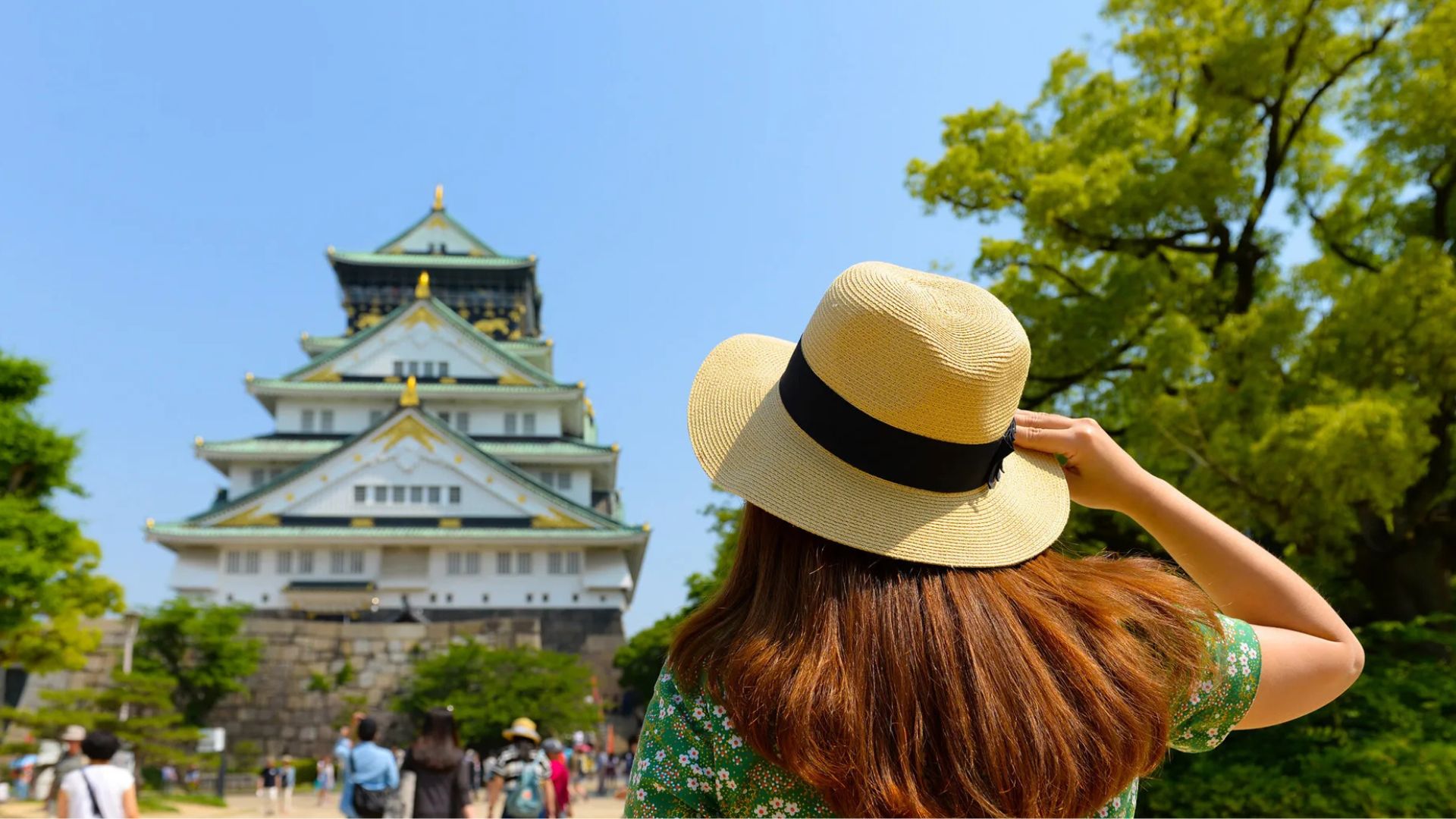
Use these travel words in Japanese to ask for directions, find stations or bus stops, request help, and move around Japan more confidently during your trip.
| English | Japanese | Pronunciation |
|---|---|---|
| To do | する | Suru |
| To go | 行く | Iku |
| To come | 来る | Kuru |
| I want to go to the train station | 駅に行きたいです | Eki ni ikitai desu |
| Where is the bus stop? | バス停はどこですか? | Basutei wa doko desu ka? |
| Where is the train station? | 駅はどこですか? | Eki wa doko desu ka? |
| How do I buy a ticket? | 切符はどうやって買いますか? | Kippu wa dō yatte kaimasu ka? |
| Please take me to this address | この住所までお願いします | Kono jūsho made onegaishimasu |
Numbers in Japanese
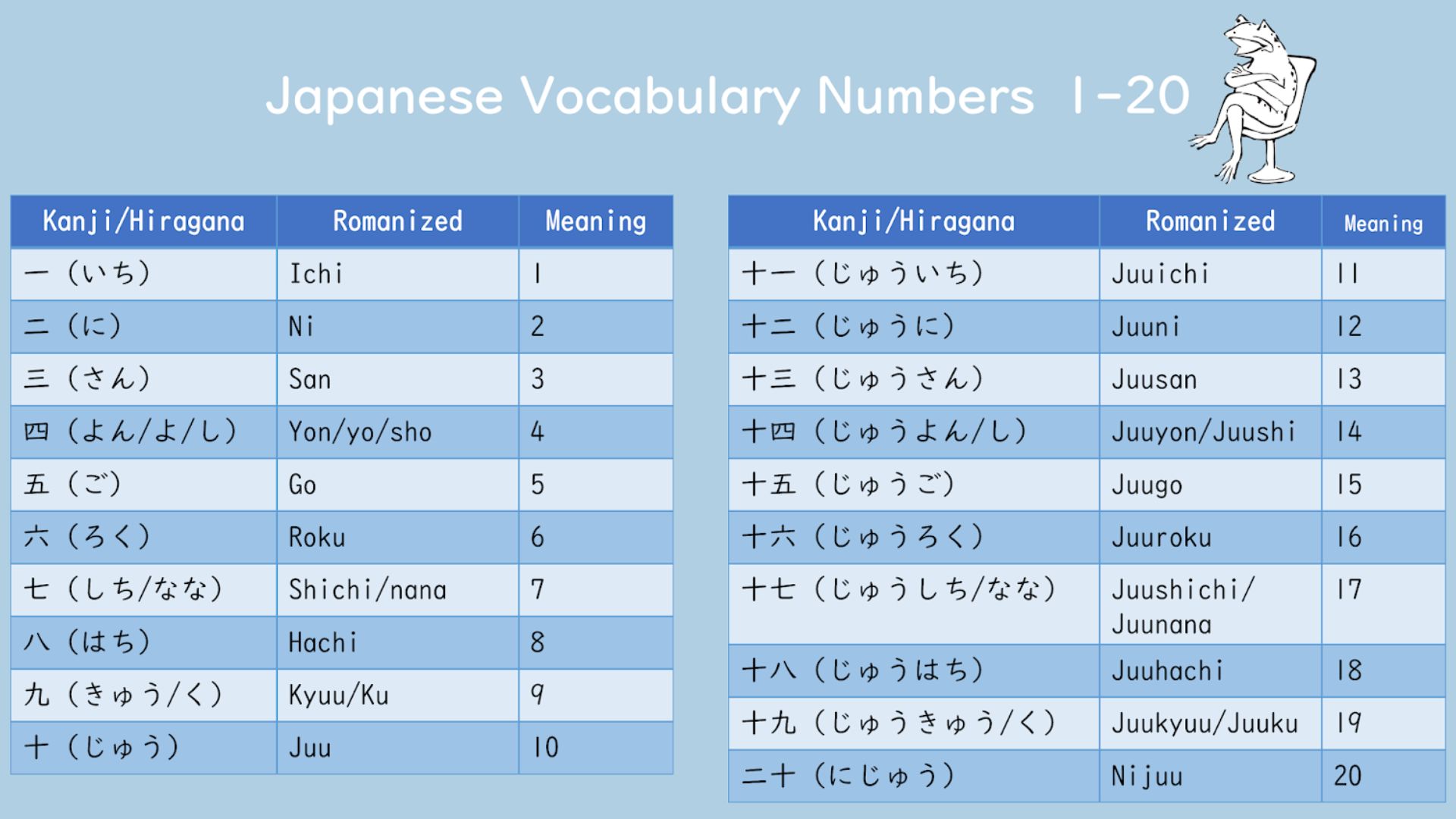
Learn numbers in Japanese to ask prices, understand train platforms, read menus, count items, shop easily, and manage everyday travel situations confidently.
| English | Japanese | Pronunciation |
|---|---|---|
| 1 | 一 | Ichi |
| 2 | 二 | Ni |
| 3 | 三 | San |
| 4 | 四 | Shi / Yon |
| 5 | 五 | Go |
| 6 | 六 | Roku |
| 7 | 七 | Shichi / Nana |
| 8 | 八 | Hachi |
| 9 | 九 | Ku / Kyū |
| 10 | 十 | Jū |
| 100 | 百 | Hyaku |
| 500 | 五百 | Go-hyaku |
| 1000 | 千 | Sen |
Emergency words in Japanese
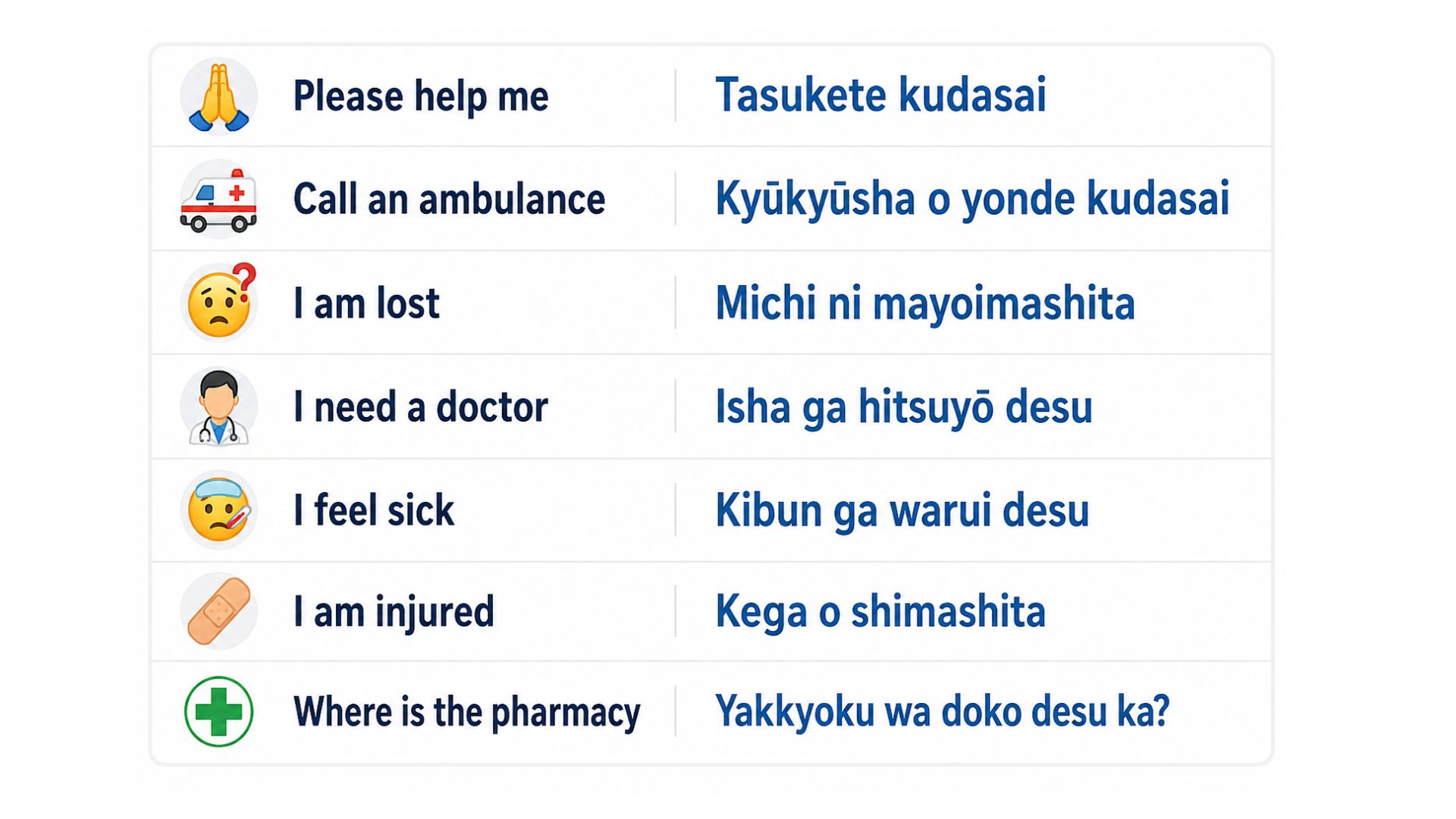
Learn these emergency words in Japanese to ask for help, call an ambulance, find a doctor, visit a pharmacy, or explain that you are lost, sick, or injured. These phrases can be extremely useful for tourists during unexpected situations and help you communicate quickly when urgent assistance is needed.
| English | Japanese | Pronunciation |
|---|---|---|
| Please help me | 助けてください | Tasukete kudasai |
| Call an ambulance | 救急車を呼んでください | Kyūkyūsha o yonde kudasai |
| I am lost | 道に迷いました | Michi ni mayoimashita |
| I need a doctor | 医者が必要です | Isha ga hitsuyō desu |
| I feel sick | 気分が悪いです | Kibun ga warui desu |
| I am injured | けがをしました | Kega o shimashita |
| Where is the pharmacy? | 薬局はどこですか? | Yakkyoku wa doko desu ka? |
ALSO SEE – Affordable Countries to Visit from India- Guide for Kerala Travellers
How to Learn Basic Japanese Phrases for Tourists Before Your Trip?
Learning Japanese can do good for your upcoming travel. But how do you become fluent in a short time? Here are a few knowledge assets that can definitely be your guide:
-
-
-
Language Applications
-
-
New-age applications like Duolingo and LingoDeer can help beginners understand the key phrases and practice their conversations confidently. There’s always a test and score card at the end so you can assess yourself.
-
-
-
Talkpal
-
-
Talkpal is an AI learning platform helps you practise your dialects and listening skills with the help of an AI tutor. It offers personalised feedback, interactive modes, and pronunciation correction so you can improve significantly until your travel begins.
-
-
-
Flashcards
-
-
If you want, you can play the flashcard game with your travel partner so you both can work on your Japanese before the trip. They work on your recall memory and help with long-term retention.
-
-
-
Conversation Platforms
-
-
Platforms like Tandem and HelloTalk help you improve fluency through 1:1 conversation. You can engage in a conversation with native speakers and try to adapt their pronunciation better.
If you are planning a trip to Japan and confused about whether you’ll be able to communicate, know that a quick learning session can help immensely. Practice, especially the main words, regularly, and you’ll develop a habit by the time your plane lands. And the perk? You’ll add one more language to your repertoire and eventually become fluent.
Why learn Basic Japanese Phrases for Tourists?
If you want to make the most of your trip to Japan, it is imperative that you learn at least a few basic phrases (if not proficient). It will help you interact and convey your messages to the locals there. Otherwise, you’ll just be depending on “Siri” to talk to anyone for you.
Here is why learning is the right thing to do:
-
-
-
Explore Confidently
-
-
How would you ask the local guides the way to the tourist attractions? To make sure you reach the right place, communication is inevitable. It will make your conversations at train stations and hotels much easier.
-
-
-
Create Connections
-
-
If you are at a new place, you’d want to explore the cultural aspects of it. And when the stay is long, you want to make friends and interact with other people apart from your travel partner. Being at least at a beginner level can help you connect with the locals.
-
-
-
Place Orders/Requests
-
-
Ordering your desired food at a restaurant or cafe can get better if you know the right words. You can easily read menus and order confidently. No more unpleasant dining experiences.
-
-
-
Improve Safety
-
-
In emergencies, you must know how to seek help, and that is difficult if you don’t know the right words to say.
FAQs About Japanese Phrases for Tourists
Do tourists need to know Japanese in Japan?
Tourists do not need to be fluent in Japanese, but learning a few basic phrases can make travel, dining, shopping and emergencies much easier.
What are the most useful Japanese phrases for tourists?
Some of the most useful Japanese phrases for tourists are Sumimasen, Arigatou gozaimasu, Eigo o hanasemasu ka?, Toire wa doko desu ka?, Kore wa ikura desu ka?, and Tasukete kudasai.
How do you say hello in Japanese?
You can say Konnichiwa, which means hello or good afternoon.
How do you say thank you in Japanese?
You can say Arigatou gozaimasu, which means thank you in a polite way.
What Japanese phrase should vegetarians use in Japan?
Vegetarian travellers can say Bejitarian desu, which means “I am vegetarian.” Strict vegetarians should also ask whether the food contains dashi, fish stock or bonito flakes.
Download Japanese Travel Phrases PDF
Learning a few Japanese phrases before your trip can make your travel experience smoother, safer, and more enjoyable. You do not need to become fluent, but knowing basic words for greetings, food, shopping, hotels, directions, and emergencies can help you communicate with confidence and enjoy Japan without hesitation.

[…] ALSO SEE – Common Japanese Phrases for Tourists with PDF Download […]